
The right GetFeedback alternative depends entirely on the job: for Salesforce-native survey parity, start with Zonka Feedback or SurveyVista; for UAT and visual bug reporting with automated Jira ticketing, Wezardapp is the clear pick; for deep “why” capture at scale, Perspective AI; and for organizing qualitative backlogs, Dovetail.
Worth knowing upfront: GetFeedback Direct sunsets December 31, 2026, after which data is permanently deleted. That deadline makes tool selection urgent, not theoretical.
Top picks by job:
- UAT & visual bug reporting: Wezardapp (screen recording, real-time transcription, AI duplicate detection, Jira/Azure DevOps sync)
- Salesforce-native survey swap: Zonka Feedback, SurveyVista (AppExchange listings, CRM object parity)
- AI-driven “why” capture: Perspective AI (adaptive AI interviewer, auto thematic synthesis)
- Qualitative research repository: Dovetail (synthesis-first, not a collector)
- In-app micro-feedback: Sprig (contextual product intercepts)
- Feature request prioritization: Canny (voting boards, roadmap signals)
- Visual annotation & bug capture: Usersnap (annotated screenshots, front-end reporting)
| Tool | Best for | Salesforce/CRM support | Feedback types | AI & analysis | Issue export (Jira/ADO) | Setup time | Pricing model | Trial available |
|---|---|---|---|---|---|---|---|---|
| Wezardapp | UAT, visual bug reporting | No | Screen recording, transcription, visual reports | AI deduplication, auto-transcription | Yes — Jira & Azure DevOps | Short | Tiered | Yes |
| Zonka Feedback | Salesforce-native survey swap | Yes — AppExchange | Surveys, multi-channel | Sentiment, AI signals | Via integrations | Short–Medium | Tiered | Yes |
| SurveyVista | Lift-and-shift from GetFeedback Direct | Yes — AppExchange | Surveys, in-app | Basic | Via integrations | Short | Tiered | Yes |
| Perspective AI | Deep qualitative “why” at scale | Partial | Conversational interviews | Auto themes, synthesis, full transcript | No native export | Medium | Per-seat/tiered | Yes |
| Canny | Feature request & roadmap tracking | Partial | Feedback boards, voting | Basic tagging | Jira | Short | Tiered | Yes |
| Sprig | In-app micro-surveys, UX validation | Partial | In-product surveys, widgets | AI analysis | Limited | Short | Tiered | Yes |
| Dovetail | Qualitative synthesis & repository | No | Uploads, notes, tags | Autotagging, clustering | No | Medium | Per-seat | Yes |
| Usersnap | Annotated visual bug capture | Partial | Screenshots, annotations, session capture | Basic | Jira, Azure DevOps | Short | Tiered | Yes |
Pilot checklist before you commit:
- Verify Salesforce object parity and bilateral sync in a real environment, not a demo
- Run a closed-loop test: survey response → ticket in Jira or Azure DevOps → resolution
- Submit 50 duplicate bug reports and confirm deduplication catches them
- Measure time-to-first-action from feedback submission to developer assignment
Pro Tip: Never assume “Salesforce connector” equals native parity. Test object mapping and trigger logic end-to-end during the pilot — that’s where migrations break.
Three migration red flags to watch: treating any connector as equivalent to GetFeedback Direct’s native architecture; picking tools that only collect and leave analysis manual; and losing account-level aggregation if your B2B model weights feedback by revenue.
Table of Contents
- What do these tools actually cost, and how long does migration take?
- How do these tools compare on ease of use?
- What kind of support and onboarding do these tools offer?
- Which tools meet GDPR and HIPAA requirements?
- How well do these tools scale and support customization?
- Do these tools work on mobile and offline?
- Wezardapp is built for UAT, not just surveys
- Key Takeaways
What do these tools actually cost, and how long does migration take?
Pricing across this category spans a wide range. Zonka Feedback and SurveyVista sit in mid-market subscription tiers, scaling with response volume and channels. Perspective AI and Dovetail typically price per seat. Sprig, Canny, and Usersnap all offer tiered plans with free trials or limited free tiers. Wezardapp offers tiered pricing with a trial period suited to a 2–4 week pilot.
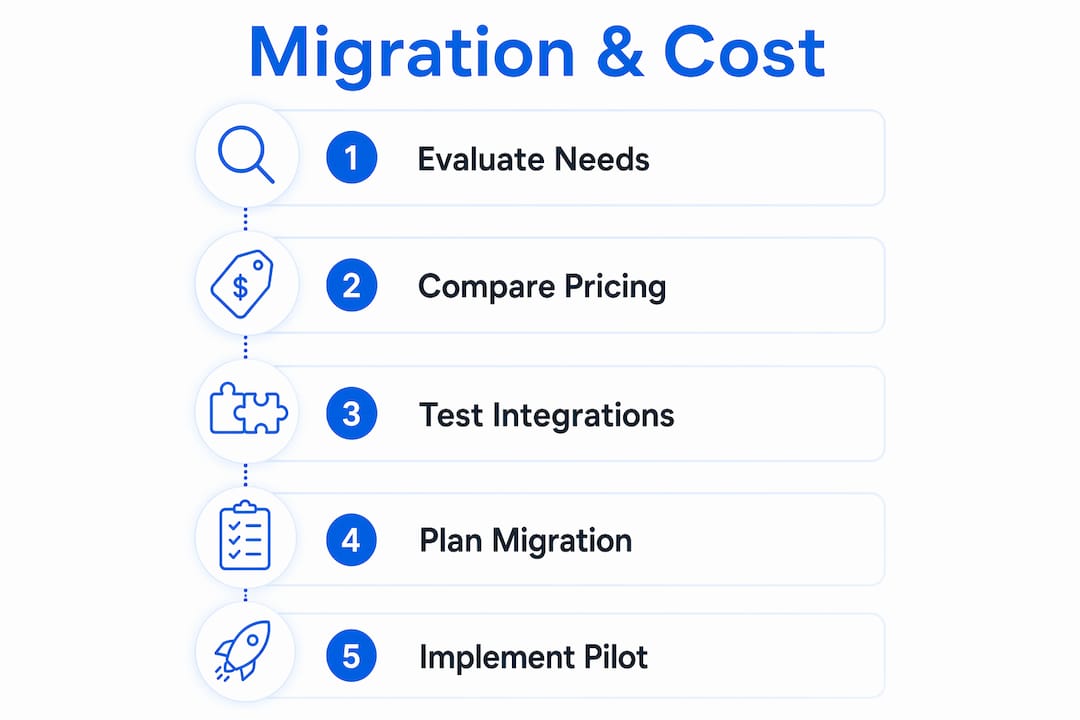
Migration timelines vary more than vendors admit. A simple survey swap into Zonka or SurveyVista can take one to two weeks if your Salesforce objects are clean. Rebuilding trigger logic and custom object mappings for a complex CRM workflow often takes longer — plan for three to six weeks minimum. Perspective AI and Dovetail involve less CRM plumbing but require time to migrate historical qualitative data and retrain your team on synthesis workflows.
How do these tools compare on ease of use?
Wezardapp, Usersnap, and Canny are the fastest to get running. Install a browser extension or embed a widget, and your first report lands in Jira within minutes. That short path to value matters for QA teams running a time-boxed pilot.
Zonka Feedback and SurveyVista require more configuration upfront, particularly around Salesforce object mapping, but their interfaces are survey-builder familiar. Perspective AI has a steeper learning curve because the paradigm shifts from form design to conversation design. Dovetail rewards teams that invest in tagging taxonomies; without that structure, the repository becomes another data silo.

What kind of support and onboarding do these tools offer?
Wezardapp, Usersnap, and Sprig lean on self-serve documentation and in-app guidance, which suits dev teams who prefer to move fast without waiting on a CSM. Zonka Feedback and SurveyVista offer more hands-on onboarding, which matters when Salesforce object configuration is involved. Perspective AI provides guided onboarding for teams new to conversational research design. Dovetail has strong community resources and documentation but is primarily self-serve at lower tiers.
For teams running a complex GetFeedback migration with custom Salesforce workflows, consider engaging a product development partner to handle integration architecture alongside the tool evaluation.
Which tools meet GDPR and HIPAA requirements?
Security posture varies significantly across this list. Zonka Feedback and Dovetail publish SOC 2 compliance documentation. Perspective AI and Sprig both address GDPR in their data processing agreements. Usersnap and Canny publish standard GDPR-compliant data handling policies.
For HIPAA-regulated environments, verify Business Associate Agreement availability directly with any vendor before piloting. None of the tools in this list should be assumed HIPAA-ready without explicit confirmation. Teams handling sensitive user data should also confirm data residency options, particularly for US-only storage requirements.
How well do these tools scale and support customization?
Dovetail and Perspective AI scale well for research-heavy teams because their core value is analysis depth, not response volume. Zonka Feedback handles high-volume multi-channel collection and supports custom survey logic. Wezardapp scales for QA programs with large tester pools, where AI deduplication becomes critical — without it, a 200-tester UAT round generates dozens of duplicate tickets that slow down the entire sprint.
Tester feedback quality improves significantly when the tool enforces structured capture. Canny’s customization is intentionally limited; its value is in the opinionated workflow, not flexibility. Teams building AI-enabled feedback features into their own products may find a partner like Spark Concept useful for prototyping synthesis workflows before committing to a platform.
Do these tools work on mobile and offline?
Zonka Feedback supports offline kiosk and mobile collection, which sets it apart for service environments with physical touchpoints. Sprig and Usersnap are web-first but have mobile SDK support. Wezardapp’s screen recording and transcription work on desktop browsers and mobile web; native mobile app recording depends on the integration method.
Perspective AI and Dovetail are primarily web-based with no meaningful offline capability. Canny is web-only. For teams that need offline survey collection at events or in low-connectivity environments, Zonka Feedback is the only tool in this group with a credible answer.
Wezardapp is built for UAT, not just surveys
When your primary need is UAT-oriented feedback with visual context and automated ticket creation, Wezardapp is the right pick. It records the screen, transcribes the issue in real time, and uses AI duplicate detection to stop redundant tickets before they reach your backlog.

For a dev or QA team, the pilot runs in one to three weeks: install the widget or browser extension, submit a test issue, and verify the payload lands correctly in Jira or Azure DevOps. Then submit 50 duplicate reports and confirm deduplication catches them. Finally, replay a recording to verify regression reproducibility. That’s the whole pilot.
Pro Tip: During the pilot, validate that fields map to your bug lifecycle: priority, component, and reproducibility steps should all arrive in the ticket automatically. If they don’t, the tool is saving testers time but creating work for developers.
Explore Wezardapp’s UAT testing features or review the acceptance testing entry criteria to scope your pilot before you start.
Key Takeaways
For dev and QA teams evaluating GetFeedback alternatives, the right tool is determined by job fit, not feature count: Wezardapp wins for UAT and visual bug reporting, while Zonka Feedback and SurveyVista cover Salesforce-native survey parity.
| Point | Details |
|---|---|
| GetFeedback Direct deadline | GetFeedback Direct shuts down December 31, 2026; migration planning should start now. |
| Salesforce parity requires testing | Never assume a connector equals native parity; test object mapping and trigger logic in a real pilot. |
| UAT teams need deduplication | AI duplicate detection prevents redundant tickets from slowing sprint velocity during large tester rounds. |
| Analysis bottleneck needs a different tool | If organizing existing qualitative data is the problem, Dovetail solves it; adding another collector does not. |
| Wezardapp for UAT | Wezardapp records screens, transcribes issues, detects duplicates, and syncs directly to Jira and Azure DevOps. |


