
Acceptance criteria validation is the process by which QA analysts confirm that every feature condition is clear, measurable, and testable before a single line of code is written. This practice sits at the center of quality assurance because it converts vague requirements into binary pass/fail conditions that every team member can act on. The Agile Alliance identifies ambiguous requirements as a top driver of rework in agile projects. Understanding why QA analysts validate acceptance criteria explains why high-performing teams treat this step as non-negotiable, not optional.
Why does validating acceptance criteria reduce defects and rework?
Ambiguous requirements cause a disproportionate share of software defects. When a story says a feature should respond “quickly,” developers and testers each form a different mental picture. That gap produces code that passes internal review but fails user expectations, and the team pays for it in rework cycles.

Validated acceptance criteria eliminate that gap by replacing subjective language with objective thresholds. A non-functional requirement like “fast response” becomes “response under 500ms under load”, giving QA a binary condition to test against. Either the feature meets the threshold or it does not. There is no room for interpretation, and there is no debate at sprint review.
The downstream effect on rework is significant. Teams that finalize criteria before development begins avoid the costly cycle of building, testing, discovering misalignment, and rebuilding. Ambiguous requirements are a leading rework cause in agile projects, which means every hour spent clarifying criteria before coding saves multiple hours of correction afterward.
Pro Tip: When reviewing a story, ask yourself whether you can write a failing test for each criterion right now. If you cannot, the criterion is not ready.
What practices ensure acceptance criteria are clear and testable for QA?
Clear acceptance criteria do not happen by accident. They result from deliberate practices that QA analysts apply during story refinement. The following standards are the most effective.
- Use Given-When-Then format. This structure forces criteria into a testable narrative: a starting condition, a user action, and an expected outcome. It removes ambiguity by requiring specificity at every step.
- Keep criteria count between 5 and 10 per story. Experts recommend 5–10 criteria per user story to maintain testable boundaries. More than that often signals the story needs to be split.
- Include negative test cases. Happy-path-only criteria lead to late-sprint issues and budget risks. QA analysts add edge cases and failure scenarios to prevent last-minute scope creep.
- Focus on outcomes, not implementation. Criteria focused on user experience and business outcomes reduce scope creep and keep development aligned with real value.
- Avoid technical jargon. Criteria written in developer-only language exclude testers and product owners from meaningful review, which defeats the purpose of collaborative refinement.
The “Three Amigos” approach formalizes this collaboration. Product owners, developers, and QA testers refine criteria together so that edge cases surface before development, not during it. Each role brings a different lens: the product owner defines the business goal, the developer identifies technical constraints, and the QA analyst asks what could go wrong.
Pro Tip: If a story has more than eight criteria, treat that as a signal to split it. Excessive criteria often indicate analysis paralysis, not thoroughness.
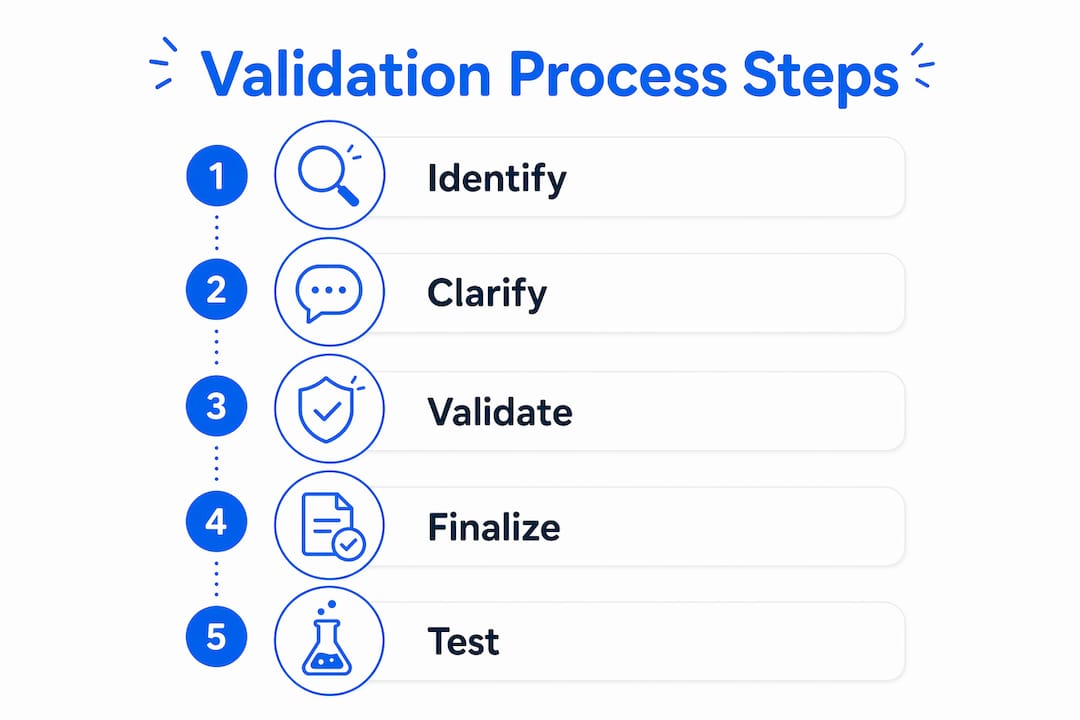
Why is early validation during backlog refinement crucial?
Timing determines whether acceptance criteria validation actually protects quality or just adds process overhead. The optimal moment is backlog refinement, before the story enters a sprint.
Here is why the sequence matters:
- Criteria written during development rationalize existing code. Acceptance criteria finalized after coding tend to justify what was already built rather than define what should be built. This retroactive justification undermines QA goals and produces misalignment at review.
- Early validation serves as a Definition of Ready gatekeeper. If a QA analyst has to ask follow-up questions to write tests, the story is not ready to enter a sprint. Catching that gap in refinement protects team velocity.
- Clear criteria improve sprint planning accuracy. Developers estimate more accurately when they understand exactly what done means. Vague criteria inflate estimates because teams pad for uncertainty.
- Validated criteria prevent mid-sprint surprises. When everyone agrees on conditions before coding starts, there are no late-breaking debates about whether a feature qualifies as complete.
Agile teams that finalize criteria during backlog refinement report that sprint execution becomes more predictable. The Definition of Ready acts as a quality gate that keeps underdefined work out of active sprints. QA analysts who push for this discipline are not slowing the team down. They are protecting the sprint from the disruption that vague requirements create.
The role of QA analysts in this phase is often underestimated. Most teams think of QA as a post-development function. The most effective teams involve QA from the first refinement session, treating testers as requirement reviewers, not just defect finders.
How do validated criteria improve testing efficiency and stakeholder confidence?
Clear acceptance criteria give QA teams a direct blueprint for test case creation. Each criterion maps to at least one test case, which means testers spend time executing tests rather than guessing what to test. Testable criteria translate directly into efficient QA test cases, improving both testing speed and accuracy.
The contrast between testing with and without validated criteria is stark:
| Testing condition | With validated criteria | Without validated criteria |
|---|---|---|
| Test case creation | Derived directly from criteria | Requires interpretation and guesswork |
| Defect detection | Early, against clear thresholds | Late, after subjective review |
| Sprint review outcomes | Predictable, criteria-based | Disputed, opinion-based |
| Stakeholder confidence | High, consistent delivery | Low, unpredictable results |
Stakeholder confidence is a direct byproduct of consistent, criteria-based delivery. When product owners and business stakeholders see that every sprint produces features that meet pre-agreed conditions, trust in the QA process grows. That trust reduces the friction of sprint reviews and accelerates sign-off cycles.
Validated criteria also reduce redundant testing. Without clear boundaries, QA teams test broadly and inefficiently, covering ground that was never in scope. With shared definitions of done, testers focus on what matters and skip what does not. The result is faster feedback loops and fewer wasted cycles. Teams that want to build on this foundation can review UAT test case best practices to connect criteria validation directly to test case structure.
Key Takeaways
QA analysts validate acceptance criteria because clear, testable conditions before development eliminate ambiguity, reduce rework, and give every team member a shared definition of done.
| Point | Details |
|---|---|
| Validate before coding starts | Criteria written post-development rationalize existing code and cause misalignment. |
| Use Given-When-Then format | This structure forces measurable, binary conditions that QA can test without interpretation. |
| Keep 5–10 criteria per story | More than 10 criteria signals the story needs to be split to stay manageable. |
| Include negative test cases | Edge cases and failure scenarios caught in refinement prevent costly late-sprint rework. |
| Involve QA in backlog refinement | Early QA participation protects sprint velocity and improves estimation accuracy. |
What I have learned from pushing for better acceptance criteria
QA professionals who wait for perfect criteria will wait forever. The real skill is knowing when to push back and how to do it without derailing the conversation. I have seen teams ship features that technically passed all tests but failed user expectations, every time because the criteria described implementation steps rather than outcomes.
The most common mistake I see is treating acceptance criteria as a developer artifact. Product owners write them, developers read them, and QA inherits whatever is left. That sequence produces criteria that are either too vague to test or too technical to connect to real user behavior. The fix is simple: get QA into the room during refinement, not after.
Vague criteria also damage team morale in ways that rarely get discussed. When testers spend sprint after sprint chasing moving targets, they lose confidence in the process. When developers get bug reports against requirements they never clearly understood, they feel set up to fail. Validated criteria fix both problems at once. They create a contract that protects every role.
The teams I have seen do this well share one habit: they treat a story without testable criteria the same way they treat a story without a description. Incomplete. Not ready. That standard, applied consistently, changes the culture of a team faster than any process document ever will.
— Marketing
How Wezardapp supports acceptance criteria validation in UAT
Wezardapp is built for teams that take acceptance criteria seriously. It records your screen during UAT sessions, transcribes issues in real time, and uses AI to detect duplicate tickets before they reach your Jira or Azure DevOps backlog. That means every defect captured during acceptance testing is tied to a clear, traceable record, not a vague comment in a chat thread.

When your acceptance criteria are validated and your test cases are mapped, Wezardapp turns the execution phase into a clean, auditable process. Teams using Wezardapp report fewer duplicate tickets and faster sign-off cycles because every issue is documented against the criteria it violates. Start with the acceptance testing entry criteria guide to see how Wezardapp fits into your validation workflow from the first refinement session to final sign-off.
FAQ
Why do QA analysts validate acceptance criteria before development?
QA analysts validate acceptance criteria before development to catch ambiguity early, when fixing it costs nothing. Criteria written or reviewed after coding begins tend to justify existing code rather than define expected behavior.
What is the Given-When-Then format in acceptance criteria?
Given-When-Then is a structured format that defines a starting condition, a user action, and an expected outcome. It forces criteria into testable, binary statements that QA can execute without interpretation.
How many acceptance criteria should a user story have?
Experts recommend 5–10 acceptance criteria per user story. More than that typically signals the story is too large and should be split into smaller, more focused stories.
What happens when acceptance criteria are vague or missing?
Vague criteria produce defects caused by misaligned expectations between developers and testers. Teams spend more time in rework cycles and sprint reviews become disputes rather than confirmations of done.
How does acceptance criteria validation connect to the Definition of Ready?
A story meets the Definition of Ready only when its acceptance criteria are clear enough for QA to write tests without asking follow-up questions. If a tester cannot derive test cases directly from the criteria, the story is not ready to enter a sprint.


